
Construction cleaning guide
How much does after-builders cleaning cost?
There is no reliable per-square-metre rate for after-builders cleaning, and any contractor quoting one before seeing the site or the specification is guessing. The price is built from labour hours, the number of visits, the condition the site is left in and the access you can give. This guide explains how a credible quote is assembled so you can compare three of them properly.
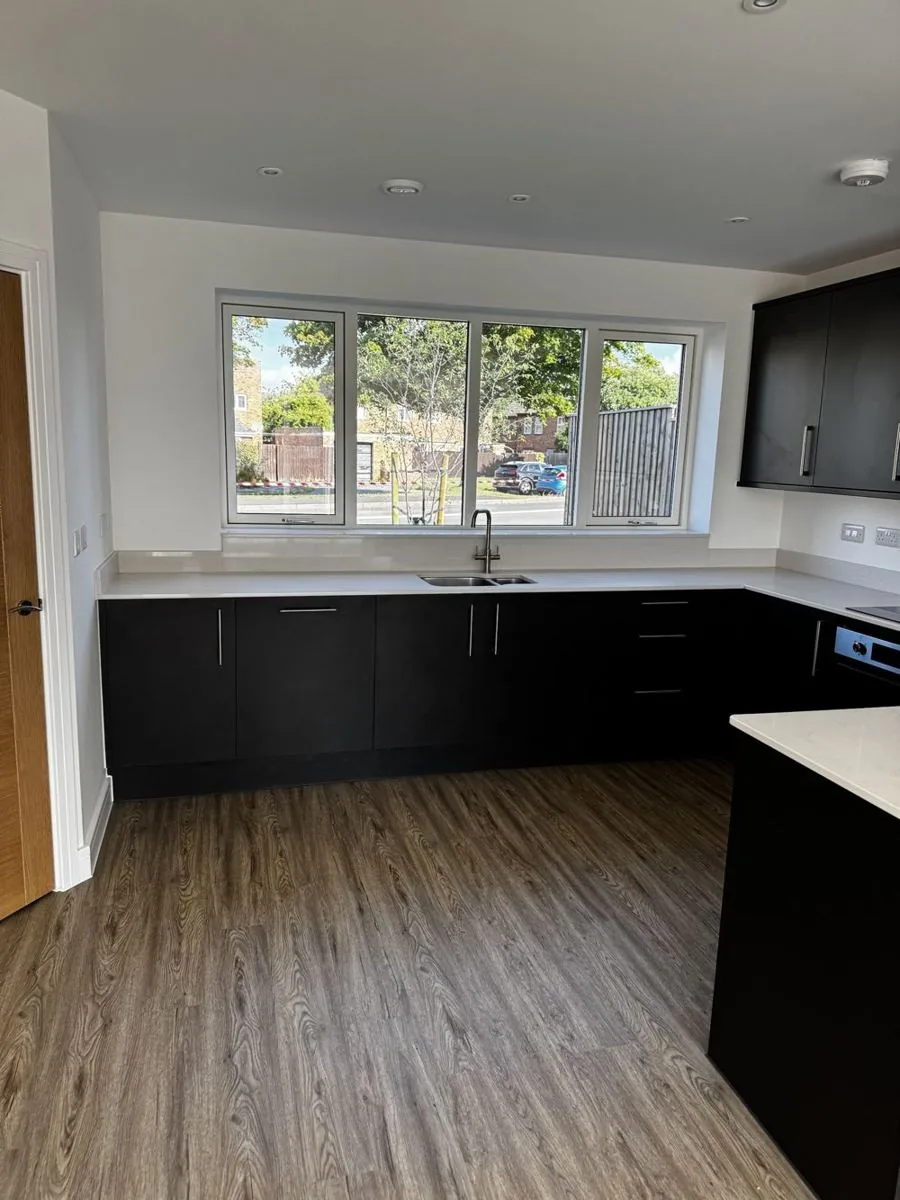
Why a square-metre rate misleads you
Floor area is the least useful number in a builders clean. A 90m² open-plan apartment with two rooms and one bathroom takes far less time than a 90m² three-bedroom house with two bathrooms, a utility, a staircase and fourteen internal doors.
Cleaning time is driven by edges, fittings and openings, not by floor. Every door has two faces, a frame, an architrave and a top edge. Every window has a frame, a sill and a track. Every kitchen has carcasses, plinths, handles and a worktop junction. Those are where construction dust sits, and they are what the hours go into.
So when one quote is markedly cheaper per square metre, the usual explanation is not efficiency. It is a narrower scope.
What a builders clean quote is actually built from
A contractor pricing properly works out an hour figure and then adds to it. The components:
- Labour hours — operatives multiplied by hours on site, which is the bulk of the price
- Number of visits — each mobilisation carries travel, setup and supervision whether it is a full day or half of one
- Equipment — M or H class extraction, water supply, access equipment, and hire costs where a machine is brought in
- Consumables — pads, cloths, chemistry suited to the finishes, and waste bags
- Waste — whether the clean generates waste the contractor removes, and whether they hold the carrier registration to do it legally
- Supervision and reporting — per-plot sign-off and photographs are real coordination hours
- Risk — contingency priced in when the scope is vague or the handover date is tight
That last line is the one you can control. A vague enquiry gets a padded price, because the contractor is pricing the worst case they might walk into.
The eight things that move the number most
1. The state the site is left in
This is the single biggest variable, and it is almost never in the enquiry. A plot where the trades have swept up and removed their packaging might take half the time of an identical plot where they have not. The difference between a tidy handover and a neglected one can double the labour.
2. Number of cleaning stages
One clean after everything finishes is cheaper per visit but risks being done too early. Two or three staged visits cost more in total but usually cost less overall, because they avoid a full re-clean after a late trade returns.
3. Glazing scope
Internal glazing is routine. External or high-level glazing is a different job with different equipment, different insurance considerations and a work-at-height method statement. It should be a separate line on every quote, and if it is not itemised, assume it is excluded.
4. Surface types
Natural stone, coated glazing, oiled timber and specialist floor finishes all need slower methods and specific products. A quote that does not mention the finishes has not accounted for them.
5. Access and site readiness
Working around live trades is slower than working in a released area. Restricted parking, a long carry, scaffolding, no lift to the fourth floor, or a one-hour window between other contractors all add hours.
6. Protective film and residue
Removing protective film from windows, baths, worktops and appliances is slow, manual work. On a large scheme it can be a meaningful share of the total. Say in the enquiry whether it is in or out.
7. Programme and timing
Weekend attendance, nights, or a compressed window before a handover date all affect how the job is resourced, and therefore the rate.
8. Volume and continuity
A single plot is priced as a single plot. Forty plots across a phase, with a predictable release schedule, is a different commercial conversation. If you have repeat work, say so at the enquiry stage rather than after the first quote lands.
How contractors structure the price
You will see three models, and they are not interchangeable:
- Per plot or per unit — common on housing. Clean and comparable, provided every quote assumes the same specification and the same number of visits
- Day rate per operative — common on commercial and infrastructure where scope moves. Transparent, but it transfers the time risk to you, so it needs supervision and an agreed output
- Fixed price against a written scope — the scope does the work. Anything outside it is a variation, priced separately
Mixing models across bidders is how comparison breaks down. Ask all three to price the same way.
What to send with the enquiry
Contractors price what they can see. Send this and you will get numbers you can actually compare:
- Floor plans or a schedule of accommodation
- The written cleaning specification, if one exists
- Site postcode and access arrangements, including parking and any induction requirement
- Handover dates and the expected release pattern, plot by plot or in one go
- Photographs of current site condition, which is the detail most enquiries omit and the one that affects price most
- The finishes schedule, or at least a note of anything specialist
- Whether external glazing, waste removal and film removal are in or out
- Whether photographic sign-off is required
Questions worth asking before you accept a price
- How many operatives, for how many hours, on how many visits?
- Is a return visit after further trade work included, or chargeable?
- What extraction class are you bringing for the dust?
- Who removes the waste, and do you hold the waste carrier registration for it?
- What exactly is excluded?
- Does the price include sign-off documentation?
A contractor who answers these without hesitation has priced the job. One who cannot is quoting a number and hoping.
How we quote
We price against a written scope rather than a headline rate, and we arrange a site survey for larger construction and commercial projects. The quotation sets out visits, inclusions and exclusions line by line, so it can be compared against anyone else’s on the same basis. Quoted prices are the final amounts payable.
Two examples of this kind of work are our after-builders cleaning for Constructa in Cambridge across more than ten new and renovated homes, and our site welfare cleaning at Medworth Energy from Waste in Wisbech.
Frequently asked questions
Is after-builders cleaning more expensive than a deep clean?
Usually, yes. Construction dust is finer and more widespread than domestic soiling, it needs different equipment, and there is far more edge and fitting detail to cover. The two are not comparable jobs.
Should I ask for a fixed price or a day rate?
A fixed price against a written scope where the work is defined, such as a plot handover. A day rate where the scope will genuinely move, such as progress cleaning on a live site. Agree which before quotes come in.
Why do quotes for the same job vary so much?
Almost always scope rather than rate. Check the number of visits, glazing, cabinet interiors, film removal and waste before concluding one contractor is expensive.
Does the price include a second visit if trades come back?
Only if it says so. Return visits after further trade work should be priced explicitly, either as included or at a stated rate.
Get a construction cleaning quotation
Send floor plans, the specification, postcode and handover dates and we will come back with a written scope and price.