Construction cleaning guide
Construction handover cleaning checklist for site managers and developers
Before a new build or refurbishment is handed over, construction dust, residues and marks should be gone from every area named in the written scope, and glazing, kitchens, bathrooms, floors, fittings and touchpoints should be inspected against that same scope rather than against an impression. The final sparkle clean belongs after the last dusty trade and after the snagging that creates dust, not before it.
Is the property actually ready to be cleaned?
The most expensive mistake on a handover clean is not a poor clean. It is a good clean done too early. If a plot is cleaned on Monday and an electrician drills into a ceiling on Tuesday, Wednesday's handover is looking at Tuesday's dust, and somebody is paying for a second visit.
Before releasing an area to the cleaning team, confirm:
- Dust-generating work in that area is finished, not nearly finished
- Materials, offcuts, packaging and tools have been cleared by the trades responsible
- Snagging that creates dust, such as filling, sanding or re-drilling, is complete or scheduled around the clean
- Protective films and coverings can be lifted, or are explicitly staying in place
- Water, power, lighting and safe access are available
- Site induction and access arrangements are agreed for the cleaning operatives
- The handover standard has been communicated in writing, not described verbally
- Specific plots, floors or zones are formally released, with a named person releasing them
On multi-plot housing developments, releasing plot by plot almost always beats waiting for the whole phase. It keeps the cleaning team productive, spreads the cost across the programme and means a slipped plot does not hold up the ones that are ready.
Construction dust is not household dust
This is the part most cleaning specifications skip, and the part that carries actual legal weight.
Dust from cutting, drilling, chasing and sanding contains respirable crystalline silica. The Health and Safety Executive is explicit that dry sweeping it is high risk: brushing lifts large quantities back into the air, and HSE notes that silica peaks from dry sweeping can run well above the eight-hour workplace exposure limit.
HSE's guidance for cleaning up construction dust is to damp down and use a brush, shovel and bucket for small amounts, use a water spray for damping down when clearing larger areas, and use vacuum attachments fitted to an H or M class extraction unit for fine material. Where the work still generates exposure, HSE points to respiratory protective equipment with an assigned protection factor of 20, such as an FFP3 mask, and tight-fitting masks require face-fit testing on the individual wearing them.
A domestic vacuum on a builders clean is not a minor shortcut. It is the wrong equipment class for the hazard, and it redistributes the dust rather than capturing it.
Source: HSE — Construction dust: dry sweeping. Control measures should follow the project's own risk assessment.
Worth asking any contractor quoting your builders clean: which class of extraction are they bringing, and are their operatives face-fit tested? A contractor who cannot answer that has not priced the job properly.
Room-by-room handover cleaning checklist
Adapt this to the project and the written specification. It is a starting point for agreeing scope, and a structure for the inspection that follows.
General rooms and circulation
- Construction dust removed from all agreed surfaces, including tops of doors and frames
- Skirtings, architraves and door frames cleaned, including the top edge
- Doors, handles, switches and sockets wiped as touchpoints
- Light fittings and ventilation grilles cleaned where accessible
- Window sills, frames and tracks detailed
- Radiators and the wall behind them cleaned where reachable
- Floors vacuumed and cleaned by a method suited to the finish
- Corners, edges and behind fittings checked, not just open floor
- Paint specks, adhesive and plaster splashes removed where it is safe to do so
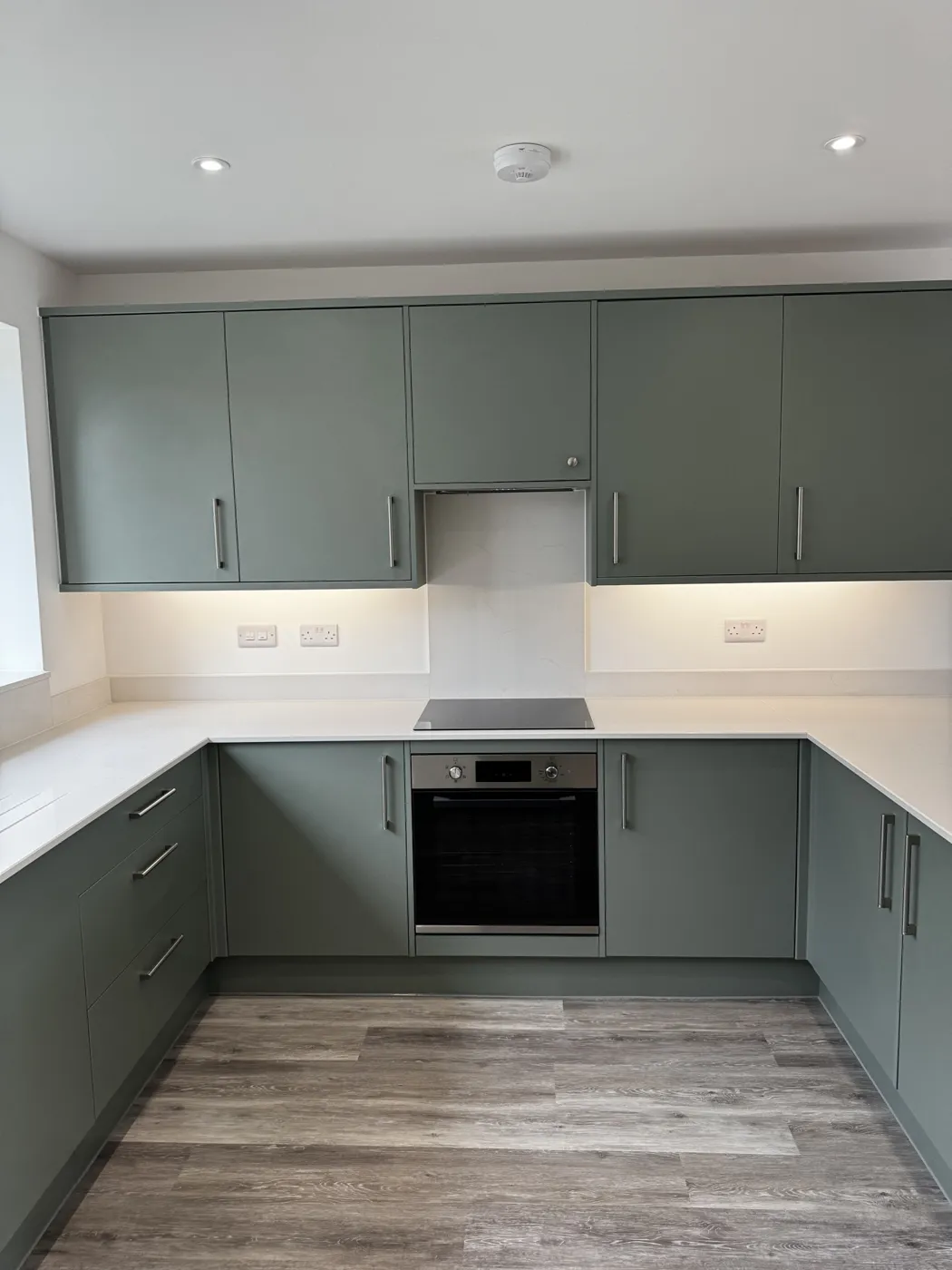
Kitchens and fitted storage
- Worktops and splashbacks cleaned
- Cupboard doors, handles and hinges wiped
- Cabinet and drawer interiors cleaned where the scope includes them
- Dust removed from shelves and internal storage
- Sinks, taps and waste fittings cleaned and polished
- Appliance exteriors detailed, and interiors where agreed
- Plinths, skirtings and floor edges cleaned
- Protective film and adhesive residue removed within the agreed scope
Bathrooms, ensuites and WCs
- Basins, baths, showers and WCs cleaned
- Grout haze and dust removed from tiling
- Mirrors and glass cleaned
- Chrome and sanitary fittings polished
- Vanity units and storage cleaned where included
- Floors, wall junctions and silicone lines checked
- Around taps, shower screens and seals inspected
Glazing and doors
- Internal glazing cleaned to the agreed standard
- Frames, handles and sills wiped
- Window tracks and drainage slots cleared
- Smears, fingerprints and labels removed
- Manufacturer guidance followed before lifting protective films
- Scratched, damaged or inaccessible glazing recorded rather than worked on
External and high-level glazing should only be included where it is safely accessible and covered by the right work-at-height arrangements. If it is in the scope, it needs its own method statement and its own line in the price.
Stairs, corridors and communal areas
- Steps, landings and floor finishes cleaned
- Handrails and balustrades wiped
- Doors, frames and vision panels cleaned
- Skirtings, corners and edges detailed
- Shared entrances, lobbies and lift interiors cleaned where in scope
- Final touchpoint pass before sign-off
On commercial schemes, extend this to reception, meeting rooms, washrooms, tea points and plant or riser cupboards where they form part of the handover.
Protecting new finishes
Newly installed surfaces are the most expensive things in the building and the easiest to ruin with the wrong product. A scratched quartz worktop or a hazed coated glass unit costs more to replace than the entire clean.
Flag these in the specification before anyone starts:
- Natural stone and engineered stone, which acid and some general-purpose cleaners will etch
- Timber and newly sealed or oiled flooring
- Coated, tinted or self-cleaning glazing
- Stainless steel and polished metals, where abrasives leave permanent marks
- New grout, which can still be curing
- Freshly painted and decorated surfaces, where even a damp cloth can burnish the finish
- Resin, vinyl and specialist floor coatings with their own maintenance regime
What the cleaning scope should actually state
Most handover cleaning disputes trace back to something that was assumed rather than written. Before work starts, the quotation should say yes or no to each of these:
- How many visits, and at which stages
- Internal glazing, external glazing, or both
- Inside cabinets, appliances and fitted storage
- Carpet extraction or specialist floor treatment
- Removal of paint, adhesive, grout haze and protective films
- What happens to the waste the clean generates, and who holds the waste carrier registration
- High-level or restricted-access areas
- Out-of-hours, weekend and phased attendance
- Return visits after further trade work, and how they are priced
- Photographic reporting and the sign-off format
Treat these as excluded unless stated: bulk construction waste clearance, repairs, snagging, and anything involving hazardous materials. Suspected asbestos-containing materials must be referred for specialist assessment. A general cleaning team should never disturb them, and no cleaning contractor should accept a scope that implies otherwise.
For quantity surveyors: an itemised cleaning schedule, priced line by line, makes quotations genuinely comparable and removes most of the argument about variations later.
The handover inspection
An inspection that is a walk-through with a nod is not an inspection. A workable process:
- Walk each completed area with the cleaning supervisor present, not afterwards
- Check visible surfaces, glazing, floors and fittings against the written scope
- Open the cupboards, storage and less visible areas the scope covers
- Record outstanding items by location, so they can be found again
- Separate cleaning defects from building defects. A dusty sill is a cleaning item. A chipped sill is a snag for someone else
- Agree corrective action and a time for it
- Record acceptance, with the date and who accepted it
Step five is the one that prevents most friction. Without it, the cleaning contractor gets handed a snagging list, and the handover slips while two parties argue about whose line it is.
Repeat the process per plot on housing schemes, and by floor, unit or zone on commercial ones. A contractor working from task lists and attendance records can give you that audit trail when the client or the funder asks for it.
What drives the cost of a handover clean
There is no honest square-metre rate that works across projects. Anyone quoting one before seeing the site is guessing. What actually moves the number:
- Size and layout — the number of rooms, fittings and edges, which matters more than floor area
- Dust and residue levels — the difference between a tidy site and a neglected one can double the labour
- Number of stages — each additional visit carries its own mobilisation
- Site readiness — working around live trades is slower than working in a released area
- Surface types — specialist finishes need more time and more care
- Glazing scope — external or high-level work changes the access requirement entirely
- Timing — weekend, night and phased attendance affect resourcing
- Reporting — photographic sign-off per plot is real coordination time
To get a quotation you can rely on, send floor plans, the cleaning specification, the site postcode, the access arrangements and the handover dates. The more of that a contractor has, the less contingency they price in.
Related guides
This article covers readiness, dust control, the checklist and sign-off. The following cover the ground around it, rather than repeating it here:
- Builders clean vs sparkle clean — what each stage includes and why the order matters
- Construction site cleaning guide — welfare, site offices and progress cleaning during the build
- Choosing a construction cleaning contractor — insurance, RAMS, labour model and references
How MG Executive Cleaners works on construction projects
We are a cleaning company based in Deeping St James, near Peterborough, working with main contractors, developers, facilities managers and businesses across the East of England and East Midlands, with selected larger projects further afield.
On construction work that covers site welfare and progress cleaning during the build, builders cleans, handover and sparkle cleaning, and commercial refurbishment cleaning.
Two examples from our published work:
- Medworth Energy from Waste, Wisbech — cleaning site offices, welfare cabins, canteens, drying rooms and washrooms on a live infrastructure project
- Constructa, Cambridge — after-builders and handover cleaning across more than ten new and renovated homes, coordinated around completion dates
We are a Corporate Member of the British Institute of Cleaning Science (BICSc), membership number 30107674, we hold upper tier waste carrier registration CBDU644808, and we issue project-specific risk assessments, method statements and COSHH information where a principal contractor requires them.
See our construction and after-builders cleaning service for the full scope.
Frequently asked questions
What is included in an after-builders clean?
Typically the removal of construction dust and surface residues, plus cleaning of floors, doors, frames, fittings, kitchens, bathrooms and agreed glazing. The exact task list depends on the written specification, which is why the specification matters more than the label on the stage.
When should the sparkle clean happen?
After the last dust-generating work in that area and after dusty snagging, as close to handover as the programme allows. Scheduling it earlier usually means paying for it twice.
Can cleaning happen while construction continues?
Yes. Progress cleaning and site welfare cleaning run alongside active construction where access and safety arrangements allow. Final presentation cleaning is a different matter and works best once an area is released.
Does an after-builders clean include removing building waste?
Not automatically. Minor waste arising from the clean itself is usually included. Bulk construction waste, skips and hazardous waste should be specified and priced separately, and whoever removes it needs the appropriate waste carrier registration.
What documents should a construction cleaning contractor provide?
Expect public and employers' liability certificates, project-specific risk assessments and method statements, COSHH assessments for the products in use, evidence of face-fit testing where RPE is required, and confirmation of how operatives are employed, inducted and supervised.
Who decides whether the clean has passed?
The client or their representative, against the written specification, at a recorded inspection. Agreeing in advance who signs and what they are signing against prevents most handover disputes.
Request a construction cleaning quotation
Managing a housing development, commercial refurbishment or infrastructure project? Send the specification, postcode and handover dates and we will come back with a written scope and price. Site surveys are arranged for larger projects.